Project Title: POST COVID TOUCH IN THE CITY – Hand sanitizers and Motion Graphics
Aims
- To find a common type of hand sanitizer (gel-based, foam-based, water-based, alcohol-based, etc) used in different establishments
- To find how motion graphics were used throughout the coronavirus pandemic to provide public information, such as about the virus itself, daily statistics, using hand sanitizers.
- To experience life in the city during the pandemic, compared to previous experience during undergraduate years
Why I chose this method (describe suitability)
- To review multiple hand sanitizers used in public spaces and which types of sanitizers are commonly used
- To justify motion graphics as a viable medium for information
- After having lived in a quiet rural area throughout the worst of the pandemic (i.e. 2020 and early 2021), I chose to regain some elements of the city life I missed out on since graduation, despite the regulations put in place in public spaces
What I did (include images)
- I used the hand sanitizers in every public space I entered to find a common type used in each type of establishment
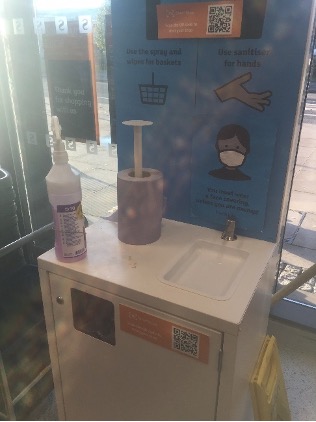
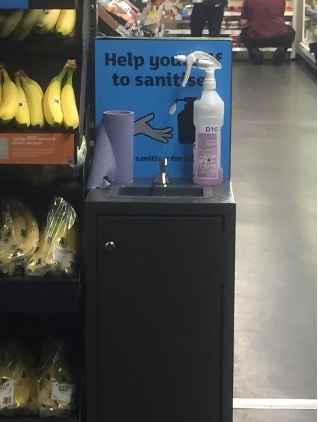
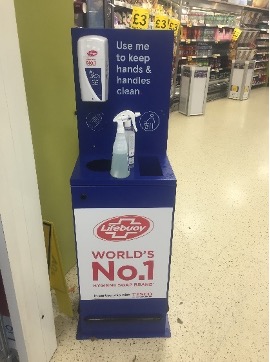
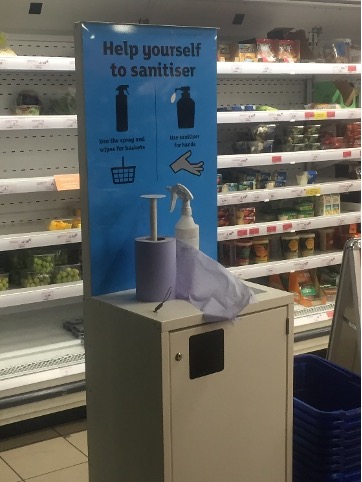
- I photographed the sanitary stations of supermarket chains (Sainsbury’s, Tesco, Co-Op) to find a common identity
SAINSBURYS (alcohol-based)
TESCO (water-based)
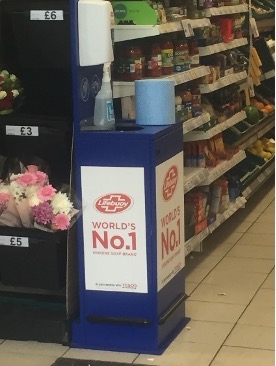
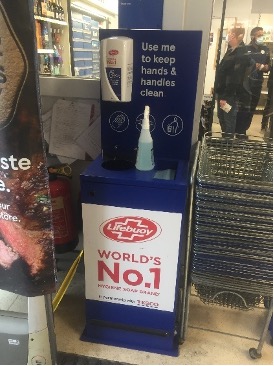
CO-OP (water-based)

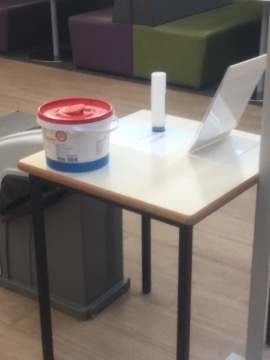
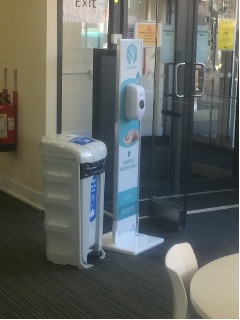
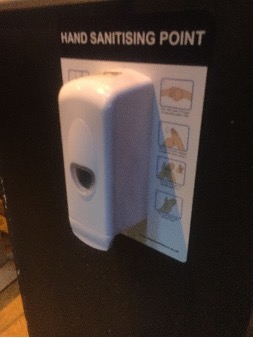
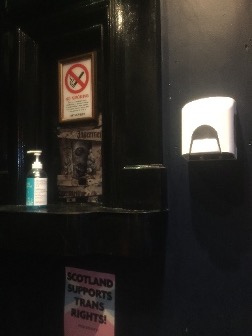
I also photographed the “sanitary stations” found at other public places.
MERCHISTON CAMPUS, EDINBURGH NAPIER UNIVERSITY


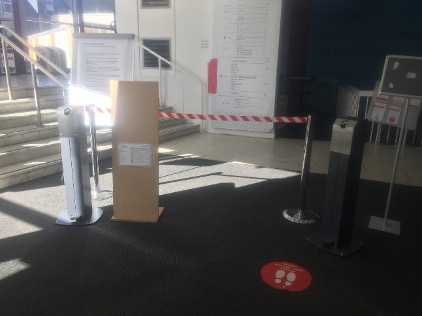


LEGENDS (OPIUM)
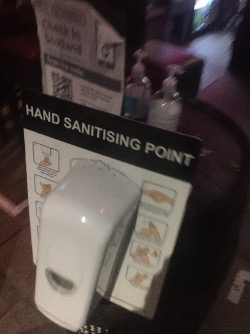
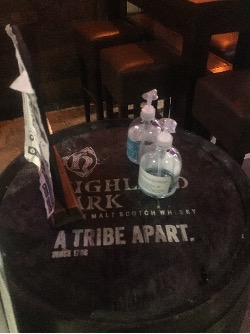
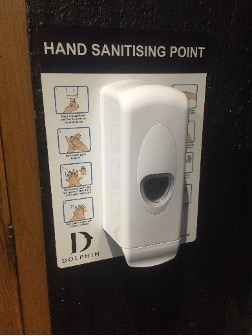
THE BANSHEE LABYRINTH
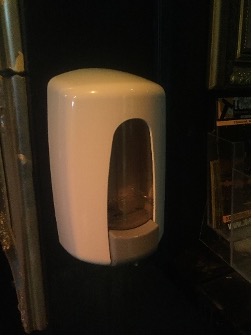
I reviewed video news reports from the BBC and Channel 4 that provide information through motion graphics.
Channel 4 – How coronavirus (Covid-19) spread day by day (Feb 12 2020)
Channel 4 – Coronavirus: Is Britain Ready? (Feb 14 2020) https://www.youtube.com/watch?v=ZBOwFBu05c8
BBC News – Coronavirus explained in 60 seconds (Mar 19 2020)
- I reviewed motion graphic videos from other reputable information resources, like the WHO and Ted-Ed
Ted-Ed – Which is better: Soap or hand sanitizer (May 5 2020) https://www.youtube.com/watch?v=x7KKkElpyKQ
World Health Organisation (WHO) – How the Covid-19 virus is transmitted (Jun 2 2021)
How I did it (detailed account)
I walked around the city of Edinburgh, visiting several favourite pubs, restaurants and other public places to experience their Covid-fighting strategies. I paid particular attention to the hand sanitizers they provided to customers and how each type is best used on a particular location.
I searched for videos on the official YouTube channels of the BBC News, Channel 4 News and found other sources at the official WHO channel and Ted-Ed. I observed the animation and the level of detail used to convey the information about coronavirus.
Findings
- Gel-based sanitizers are the most common type of sanitizers used across Edinburgh, particularly in restaurants, shops and pubs.
- Most of these gel-based solutions have more pleasant natural smells (i.e. apples, mint)
- The gel-based and foam-based sanitizers are commonly found around public toilets, presumably due to their strong properties against bacteria.
- The foam-based solutions are practically soap, which further justifies its usage in public toilets.
- The alcohol-based sanitizers (as found across Napier campuses) is similar in texture and smell to the sanitizer used in Sainsbury’s, which leave a foul smell and a thick sticky coat on the skin (defeating its own purpose)
- Tesco and the Co-op use a water-based sanitizers as they spread quicker throughout the hands.
- If a sanitary station is left unsupervised, some people in supermarkets would avoid use hand-sanitizers on entry (like crossing the road while the man is still red), unless urged by security. However, customers would still wear masks throughout their shopping experience.
- Restaurants and pubs have staff take time to urge their customers to use the Test and Protect app and apply hand sanitizers before entrance. Whereas supermarkets do not expect their customers to stay inside long enough to spread the disease.
- Channel 4 only provide static motion graphics to present statistical information (number of cases per country on maps) and therefore is not a reliable source for this project.
- The BBC also offer motion graphics to present statistical information, but provide special reports through animation, which given the timing of its publishment in the Covid timeline suggest effort in their department. However, as this video has a duration of less than 60 seconds, it means that the graphic and animation process was fast-paced.
- The WHO took effort to provide an animated video with a narrative and character animation to demonstrate the transmission of coronavirus.
- The video at Ted-Ed (also with character animation and a narrative) came especially useful for the project as it links to the early stages of researching hand sanitizers, to compare their properties with soap. This video has scientific and medical merit, showcasing the molecular structure of each substance against the coronavirus bacteria, arguing that sanitizer is useful on the go, but soap has stronger properties against the virus.
Reflection on how it could be improved
- Interview members of security in supermarkets or department stores for their insight into urging customers to use hand sanitizers
- Ask people’s opinions on their preferred hand sanitizers
- Asked Napier students their opinions of the alcohol-based sanitizer to strengthen my argument against it
Who else has done something similar (in design practice and research)
James Wannerton created a sensory map of the London Underground based on his synaesthesia condition, where he reads the names of the stations and senses a different taste from each one.
 John Irvine - MA Motion Graphics portfolio